

The Space Force's 2040 Blueprint Is Bold Doctrine and Fragile Policy
An outgoing chief just released the most ambitious public planning document the Space Force has ever produced. Its survival past FY27 is an open question.
 Hardburn Editorial
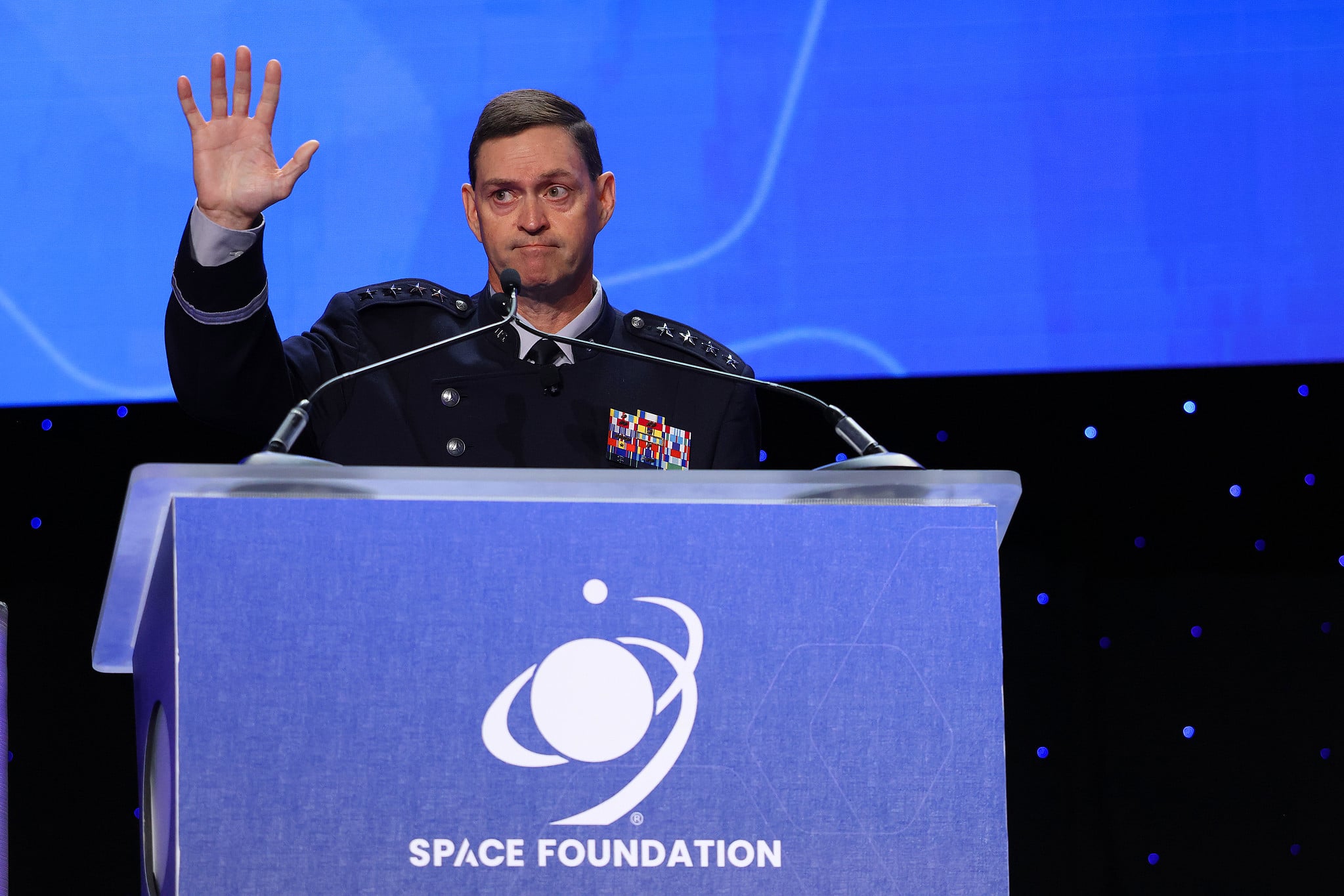
Chief of Space Operations Gen. Chance Saltzman released two foundational planning documents at the 41st Space Symposium on April 15, projecting a U.S. government on-orbit fleet of 30,246 satellites by 2040 and committing the service to an operational on-orbit refueling and space-tug architecture.
Objective Force 2040 is the most ambitious public planning document the Space Force has ever produced. It may also be the most fragile. Saltzman released the 104-page blueprint, as we reported today, alongside the 68-page Future Operating Environment 2040 as one of his final public acts as Chief of Space Operations, explicitly framed it as "not a strategy," and scoped it across three CSOs, four elections, and 15 fiscal years. The doctrine is bold. The durability isn't. What follows is an argument that the document's substantive content is real, its binding authority is thin, and its only testable commitment sits entirely inside the FY27 five-year window — which means Saltzman's successor, not Saltzman, will determine whether any of it survives.
The doctrine is real, and the service reversed years of its own skepticism to get here
Start with the substance, because the substance is genuine. On-orbit refueling and satellite maneuverability were openly contested inside the Space Force until recently. According to Breaking Defense's Theresa Hitchens, U.S. Space Command under Gens. Stephen Whiting and James Dickinson has been pushing the service toward "maneuver without regret" for years, and the service has, for years, declined to commit. Objective Force 2040 reverses that. The plan commits to demonstrating on-orbit refueling and fielding "Augmented Maneuver" space tugs between 2025 and 2030, making refueling operational between 2030 and 2035, and standing up an "initial on-orbit logistics architecture" between 2035 and 2040.
That is not rhetorical movement. The January 17 Andromeda (RG-XX) solicitation to replace the aging Geosynchronous Space Situational Awareness Program satellites included refueling capacity as a formal requirement for the first time. The FY27 budget already funds refueling demonstrations. The service has also written proliferation into doctrine, projecting a U.S. government fleet of 30,246 satellites by 2040 (up from 7,291 in 2025) and framing hybrid commercial-and-allied architectures as structural rather than supplementary. These are real positions the Space Force has now committed to publicly, and they carry real programmatic weight inside the current five-year plan.
But the document disclaims itself
Saltzman's own framing of Objective Force 2040 makes the durability question unavoidable. He called it a "North Star," not a plan. He told reporters it is "not intended to align with the National Defense Strategy" and added, "There is no intent to square this with a strategy, because it is not a strategy. It is simply one vision, one conceptualization of what the future could be." In his keynote, he described the document as "a point of departure and a catalyst" and asked the audience to "read it critically, debate our assumptions, and then offer suggestions."
These are not throwaway lines. They are load-bearing disclaimers. A 15-year force-design document that the authoring CSO publicly disclaims as non-binding, non-strategic, and subject to revision has reduced its own institutional weight by design. The document's own introduction says the service will "publicly release an unclassified Objective Force every five years," which means even the Space Force anticipates the current version being superseded by 2031. What Saltzman released on April 15 is a snapshot of one administration's thinking, explicitly framed as the opening move in a conversation rather than the last word on anything.
That framing is defensible on the merits. Predicting 2040 is genuinely hard, and a candid document beats a brittle one. But candor about the document's limits is also an invitation for every future budget cycle to treat the specifics as negotiable.
Only FY27 has real programming authority. Everything past 2030 is letterhead
The Space Force's own structure of Objective Force 2040 confirms this. The plan is explicitly divided into three five-year epochs: 2025–2030, 2030–2035, and 2035–2040. Only the first carries real budget backing. As Saltzman told reporters, "the next five years, for which you see good budgeting and programming information. There's the five years that follow that, and there's the five years that get us to 2040." The first epoch is programmed. The second is notional. The third is forecast.
This matters because everything the document promises past 2030 depends on future budgets authored by future CSOs under future administrations. The 2030–2035 commitment to operational on-orbit refueling requires sustained appropriations that today's FY27 budget cannot guarantee. The 2035–2040 "initial on-orbit logistics architecture" is, in programmatic terms, a forecast that three successive five-year plans will preserve the line. There is no mechanism in the document that obliges any future CSO or administration to carry it forward.
The commitments that can be tested today are narrow: the FY27 refueling demonstrations, the Andromeda refueling-capacity requirement, and the AMTI first-increment awards that Air Force Secretary Troy Meink said are coming "fairly shortly." These are real. These can be measured. Everything else sits beyond the programming horizon.
The test is whether FY28 carries the refueling line, and that budget belongs to Saltzman's successor
Saltzman's term as CSO is ending. Defense One reported that the April 15 keynote and the roundtable that followed mark "one of his last major public engagements as the service's top uniformed officer." His successor will author the FY28 Presidential Budget Request and will own the transition from FY27 programmed commitments to the 2030–2035 epoch that Objective Force 2040 treats as the refueling-operational decade.
Here is the specific, falsifiable marker Hardburn will watch: does the FY28 budget carry forward the FY27 refueling demonstration program and expand it toward operational capability, or does the line quietly slip? If it slips — even by a year — the 2030–2035 operational-refueling commitment is off schedule before the epoch begins. The document's three-epoch structure has no slack. Skipping a demonstration year does not get made up later; it cascades.
This is not hypothetical. The Space Force has an institutional history of ambitious plans that did not survive leadership transitions. The next CSO inherits Objective Force 2040 as a document. They do not inherit the political capital that produced it, and they are not bound to defend its specific milestones.
Industry is supposed to build against this signal. A non-binding document cannot anchor a market
The commercial read on Objective Force 2040 is the one the Space Force most wants to work and the one most at risk of not working. The plan's integration strategy depends on industry building commercial refueling, space-tug, and servicing capabilities against a credible government demand signal. Saltzman explicitly told industry in a Space Force Association interview that the document is the demand signal companies have been asking for: "Don't wait for the perfect requirement. Come to us with what you can offer."
That works only if industry reads the document as a commitment. The problem is that industry's capital commitments are five-to-seven-year horizons at minimum, and the document's binding authority does not extend past FY27. A company that invests in a commercial refueling capability today is betting on a procurement line that no future CSO is obligated to fund and no future administration is obligated to sustain. Space tug developers like Astroscale U.S. and Impulse Space face the same arithmetic as the broader defense industrial base: the signal is real for the next three years and speculative after that.
The hybrid commercial architecture Saltzman describes is coherent as doctrine. As a market-anchoring mechanism, it is structurally weaker than the CRS and CLPS contracts NASA used to build its commercial-services pipeline, because those programs carry multi-year firm commitments with contractual penalties. Objective Force 2040 has neither.
Hardburn Take
Objective Force 2040 is what the Space Force wants to become. What it is, on paper today, is a bet that an outgoing chief's vision survives the three successors and four administrations between now and 2040. The FY27 budget is the only evidence that vision has institutional weight. Everything else is a promise the Space Force wrote to itself.
Sources:
 Theresa Hitchens
 Theresa Hitchens
 Thomas Novelly
 Courtney Albon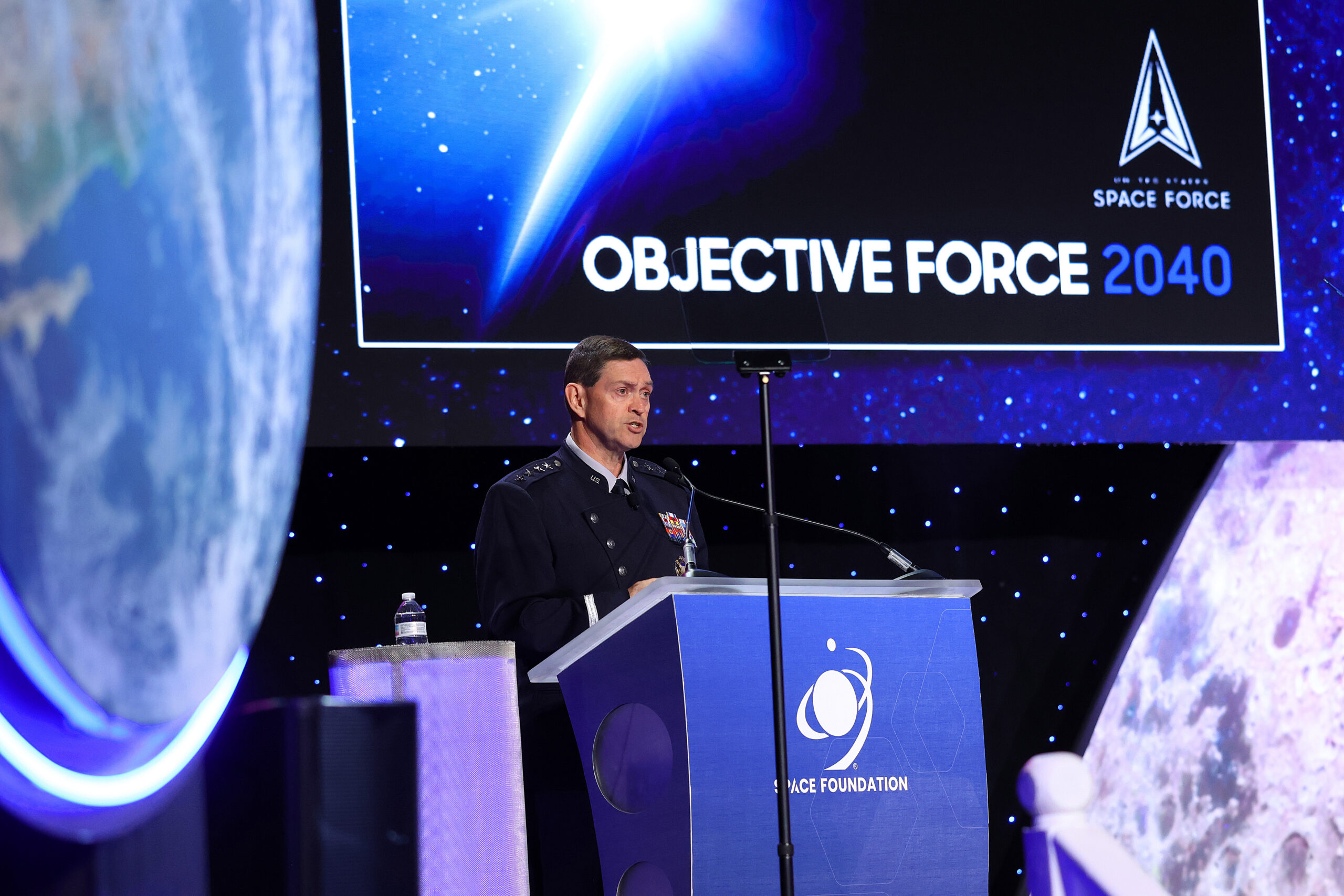
 Emily Honhart
 John Pike